Jul 17, 2026
Exterior Home Design Ideas: How to Create Lasting Curb Appeal
From the Palace of Versailles to Beijing’s Forbidden City, and the Vanderbilt’s Biltmore Estate, some residences have become architectural wonders recognized around the world. While each reflects a different culture and style, they all share one thing in common: great curb appeal where every design choice looks and feels intentional.
Fortunately, you don’t need a palace-sized budget to recreate the same design principles seen in these landmarks.
Whether you’re replacing your siding, upgrading your windows, or planning a complete exterior renovation, understanding a few fundamental design principles can help every decision feel more cohesive. Think of these principles less as rules and more as tools. They help explain why certain homes immediately feel polished while others can feel visually busy or disconnected.
Learn to See Like a Designer
Designers rarely begin by asking, “What color should the siding be?” Instead, they look at the entire composition.
They consider:
- What should your eye notice first?
- Does the home feel balanced?
- Are materials working together?
- Is there enough contrast?
- Does every design choice serve the architecture?
Once you understand those questions, every exterior decision—from window grids to front doors—becomes easier.
Let’s look at a few real homes.
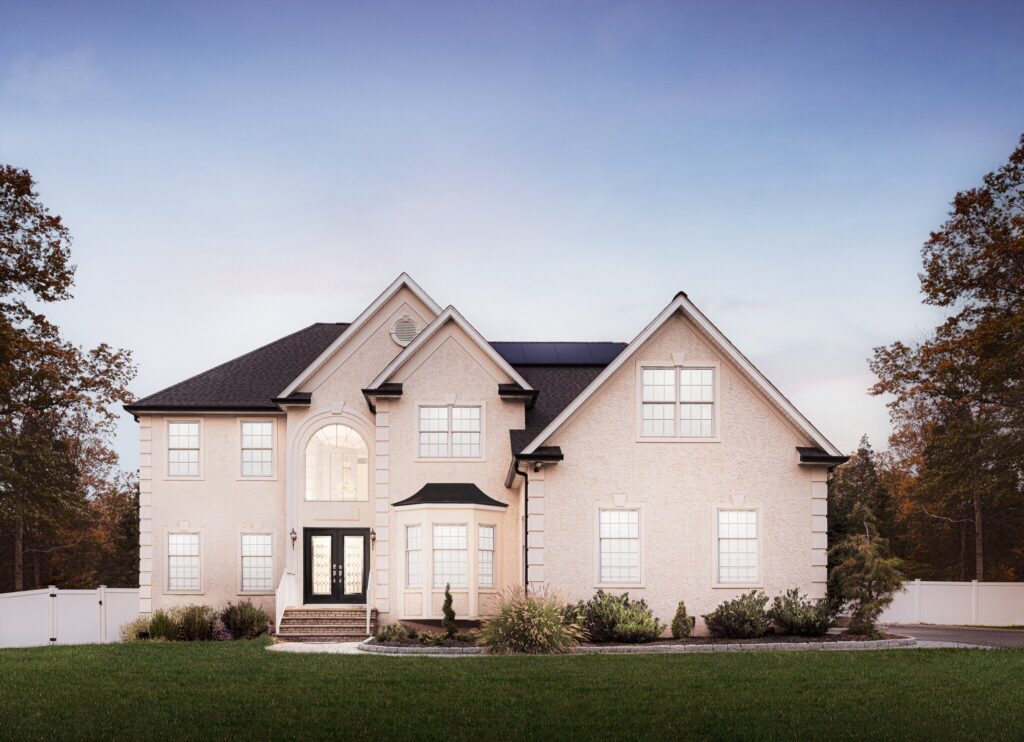
Hierarchy & Focal Point
What makes this home work?
Contrast
Few combinations create more visual definition than white masonry paired with black windows and trim.
Visual Weight
The darker garage doors and entry anchor the home while allowing lighter masonry to remain dominant.
Clean Geometry
Simple rectangular windows and uncluttered landscaping reinforce the home’s contemporary architecture.
Why it works: Modern homes often succeed by removing unnecessary visual noise. Here, restraint becomes the design feature.
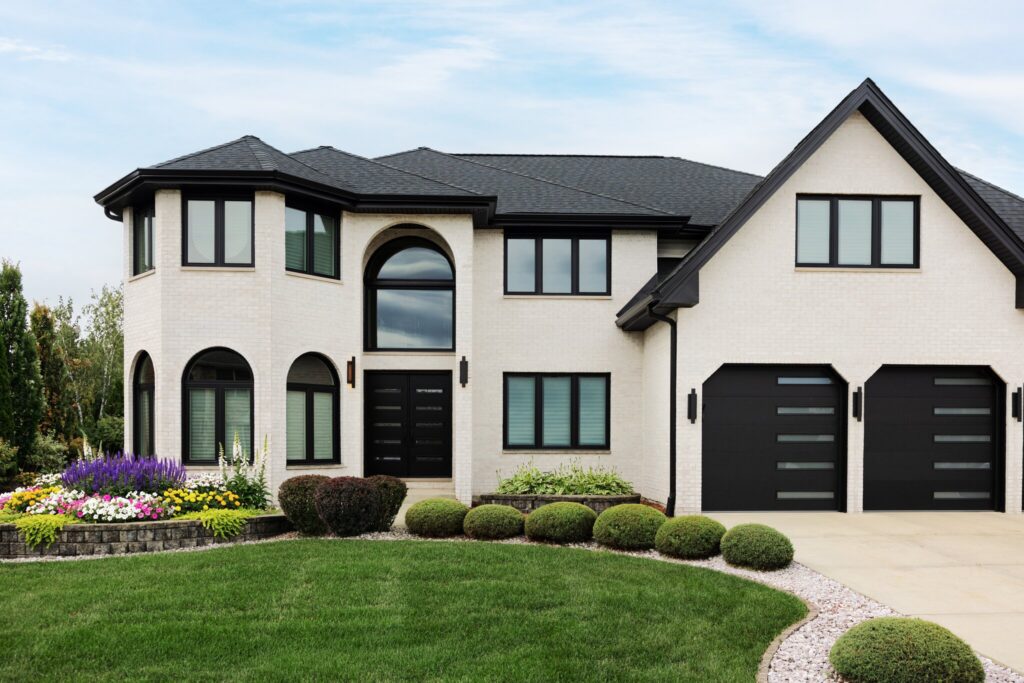
Contrast & Simplicity
What makes this home work?
Hierarchy
The dramatic arched entry immediately becomes the home’s focal point. The surrounding windows are intentionally smaller, allowing the entrance to command attention without overwhelming the façade.
Symmetrical Balance
Matching windows, rooflines and landscaping create visual stability, making the home feel formal and timeless.
Contrast
Black roofing, shutters, and the front door help to frame the light-colored stucco, allowing architectural details stand out.
Why it works: Instead of competing for attention, every element reinforces the front entrance. Your eye naturally moves from the roofline down to the doorway, creating an organized and welcoming composition.
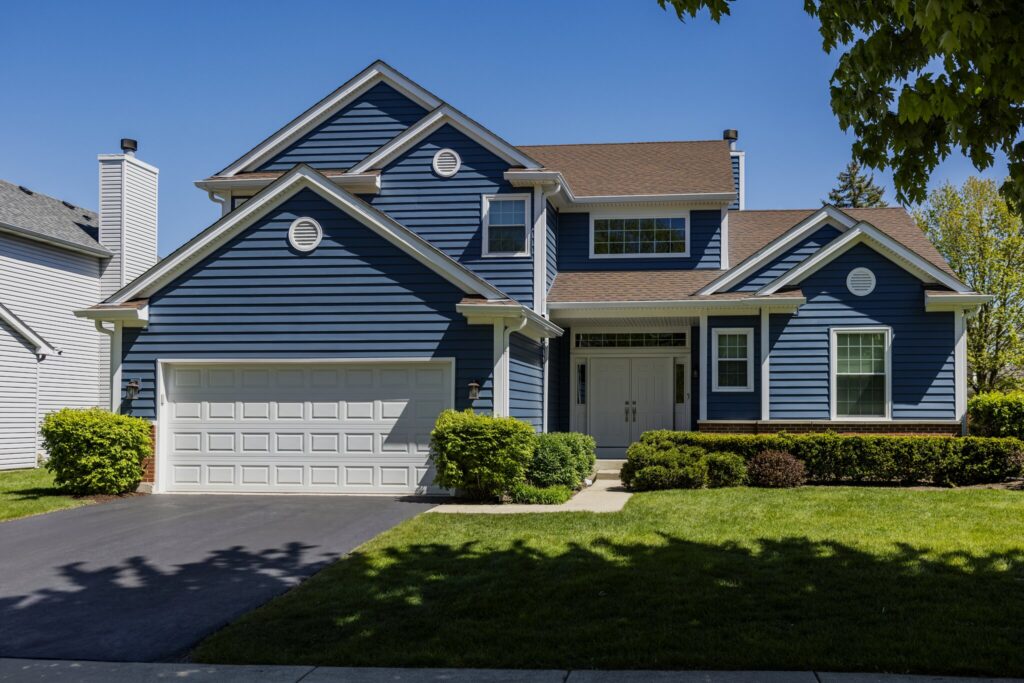
Color & Personality
What makes this home work?
Color
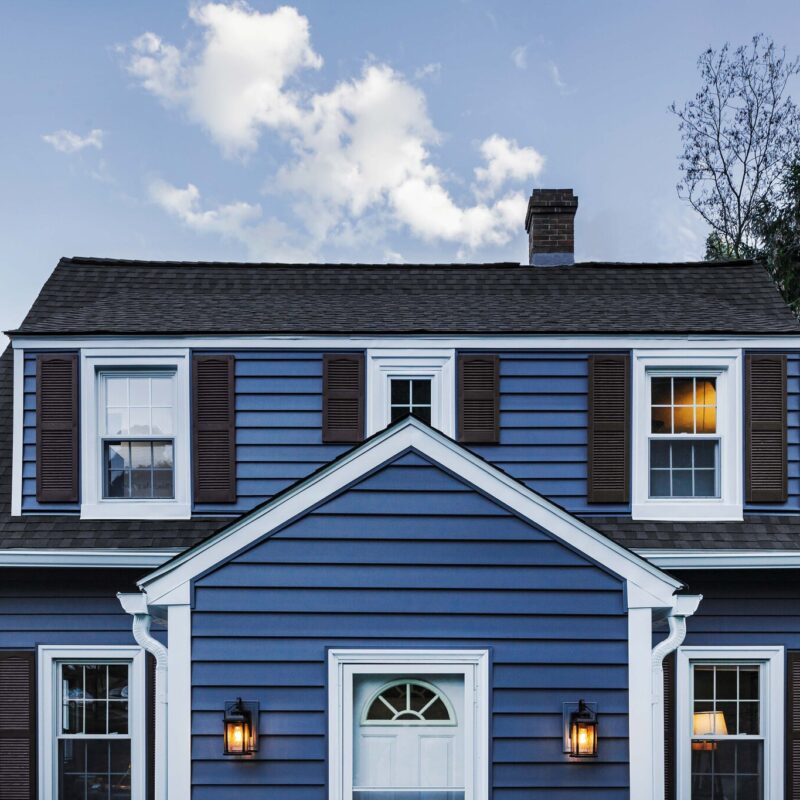
The bold blue siding establishes personality without overwhelming the neighborhood thanks to crisp white trim.
Lines
Strong horizontal siding emphasizes the home’s width, while vertical architectural elements around the entry prevent it from feeling too flat.
Hierarchy
The centered entry remains the focal point despite the large garage because of the covered porch and surrounding trim.
Why it works: The color draws you in, but the architectural detailing keeps your attention moving throughout the façade.
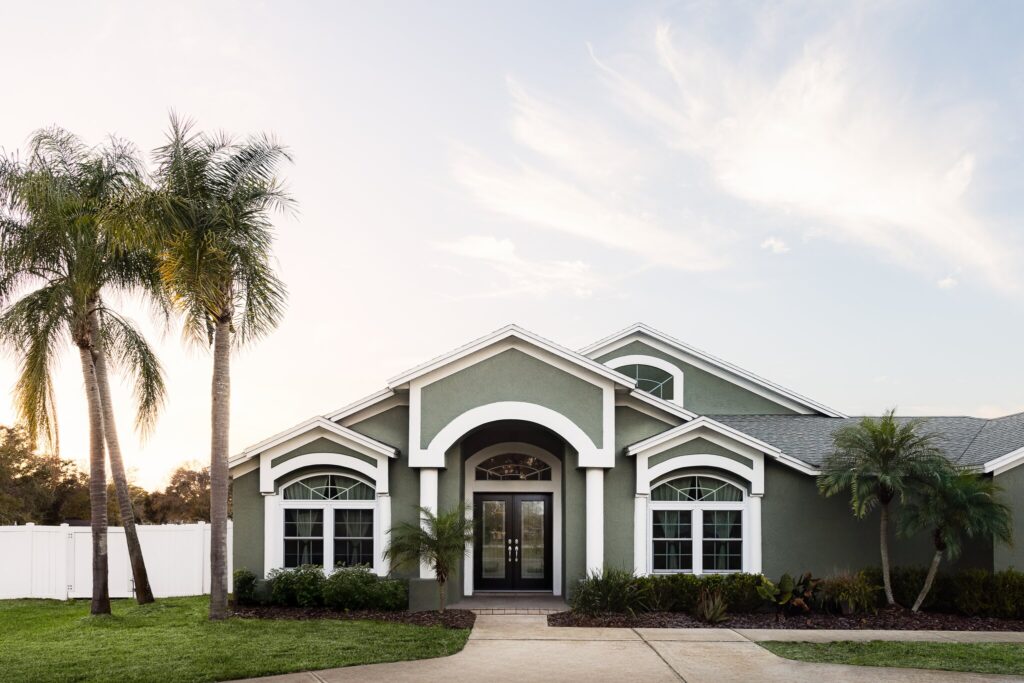
Designing for Your Environment
What makes this home work?
Rhythm
Repeated arches above the windows and entry create a consistent visual pattern.
Climate-Responsive Design
Soft green stucco, white trim and palms reflect the surrounding landscape instead of fighting it.
Proportion
Wide horizontal rooflines complement the single-story footprint.
Why it works: Rather than forcing a style, the design embraces its environment, making the home feel naturally connected to its setting.
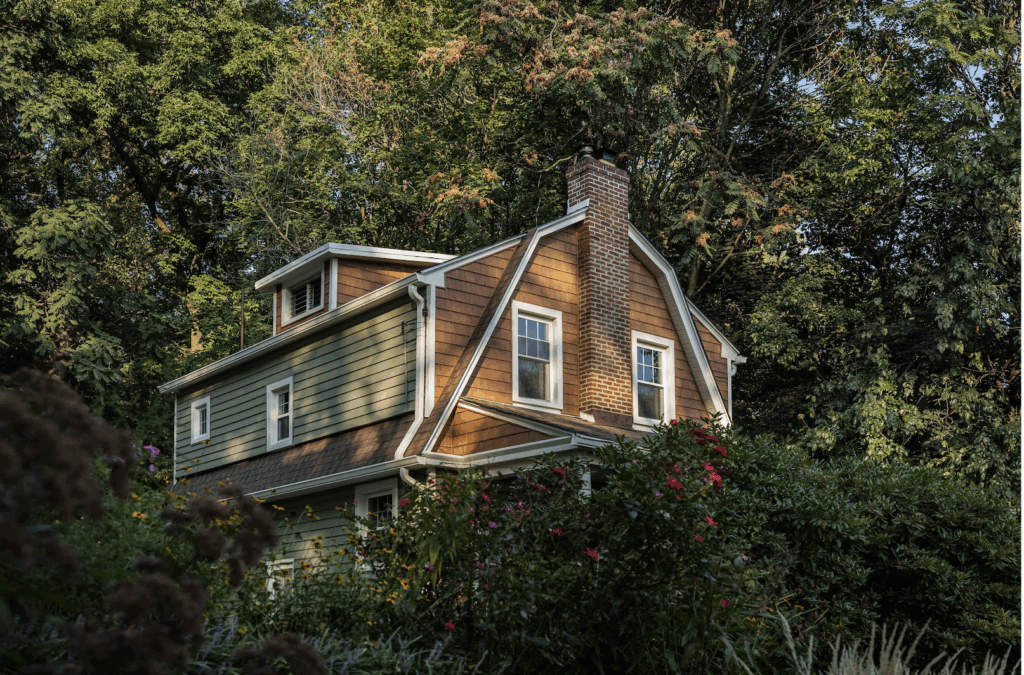
Texture & Natural Materials
What makes this home work?
Material Contrast
Natural cedar accents soften the cooler green siding.
Texture
Brick, lap siding, wood shingles and landscaping all introduce different textures without creating clutter.
Integration with Nature
The home borrows colors directly from the surrounding landscape.
Why it works: Homes surrounded by mature trees often feel strongest when they complement, rather than compete with, their environment.
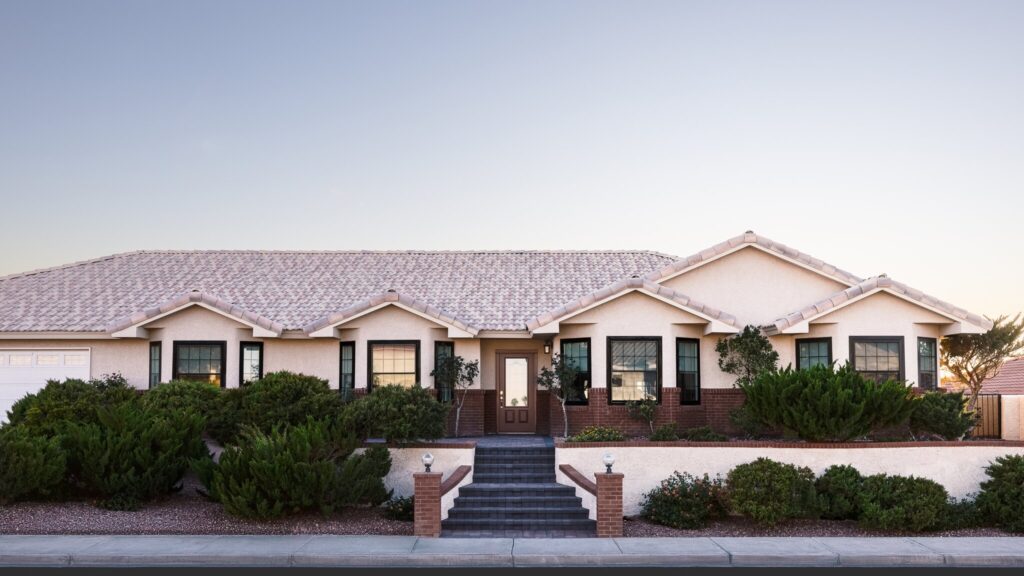
Scale & Proportion
What makes this home work?
Scale
The wide footprint is reinforced by long rooflines and evenly spaced windows.
Repetition
Consistent window sizing creates rhythm across the façade.
Negative Space
The simple walls allow landscaping and the front walkway to become part of the composition.
Why it works: Not every home needs dramatic architectural features. Simplicity often creates the strongest curb appeal.
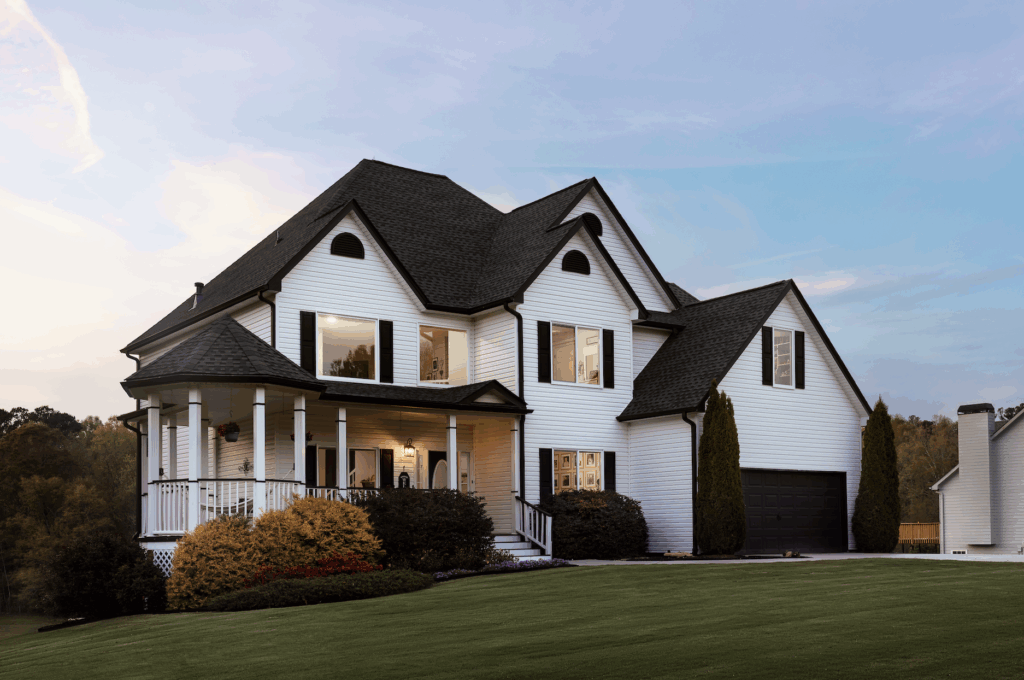
Bringing It All Together
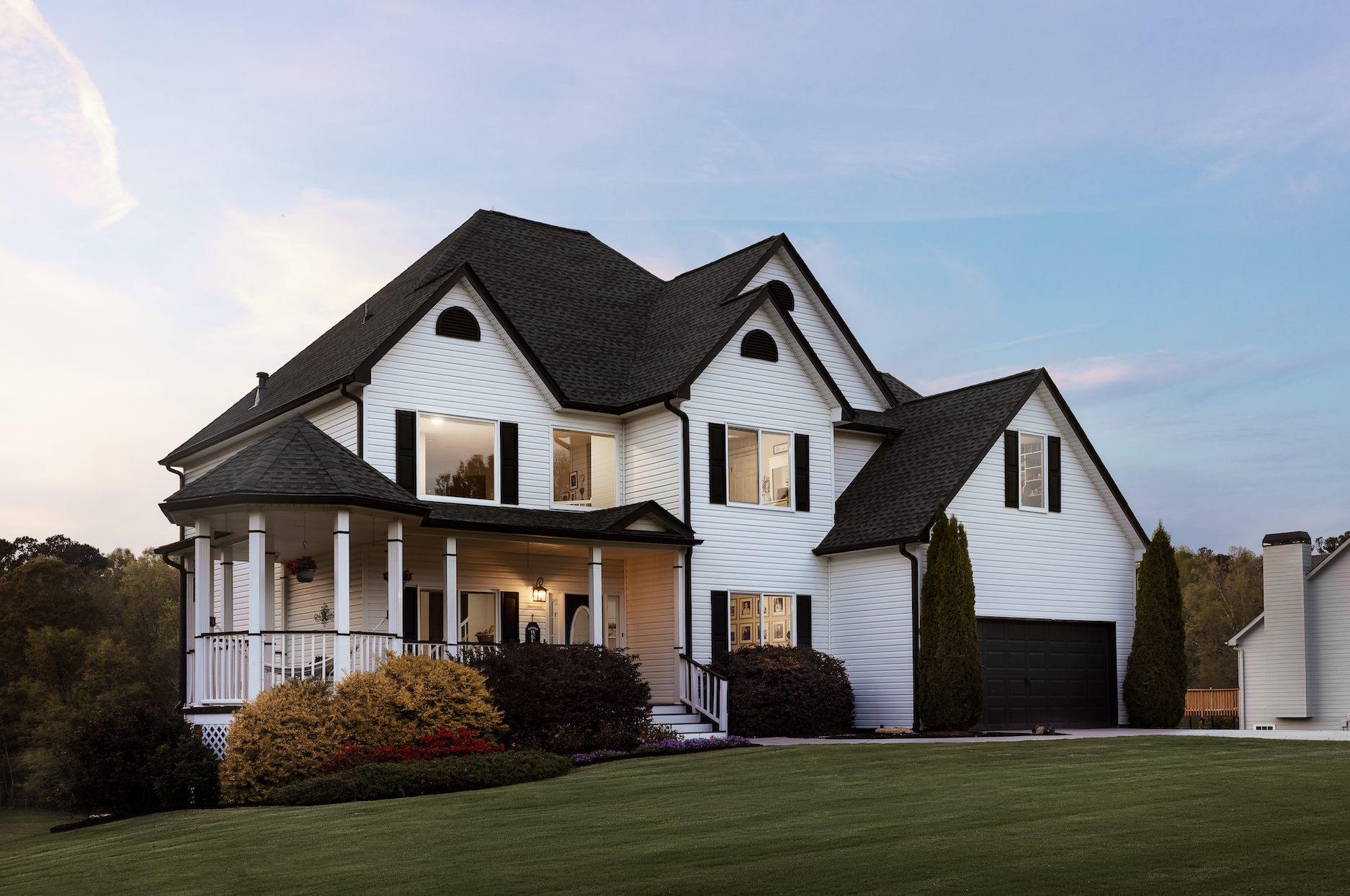
Hierarchy
The wraparound porch naturally welcomes visitors toward the front entrance.
Contrast
White siding paired with black shutters and roofing creates timeless definition.
Balance
Although asymmetrical, the porch, dormers and landscaping distribute visual weight evenly across the façade.
Why it works: This home proves balance doesn’t always require perfect symmetry—it’s about making the composition feel complete.
Design Begins With Your Environment
The strongest exteriors don’t ignore their surroundings; instead, they respond to them.
A wooded property may benefit from warmer colors, natural textures and Craftsman-inspired details. Coastal homes often lean into lighter palettes, expansive windows and clean trim profiles. Southwestern homes frequently incorporate stucco, low-pitched roofs and earth tones that reflect the desert landscape.
Climate matters, too. In regions with four distinct seasons, you’ll likely experience your home under bright summer sun, colorful autumn foliage, snow-covered winters and spring landscaping. Choosing colors, materials and architectural details that remain balanced year-round helps create curb appeal that lasts beyond a single season.
Every Exterior Element Plays a Role
Windows, doors, roofing, siding, trim, lighting, and landscaping all serve practical purposes—but together they also define your home’s architecture. When these elements share a consistent design language, they create an exterior that feels intentional instead of pieced together over time.
Understanding these principles can help contribute to a home that’s both beautiful and built to last. Looking to upgrade your home’s curb appeal? Check out our services and see where you can implement these design principles in your home’s exterior.
Back to News