Sep 3, 2026
What’s That Stain? Does Vinyl Siding Rust or Mold?
What You’ll Learn
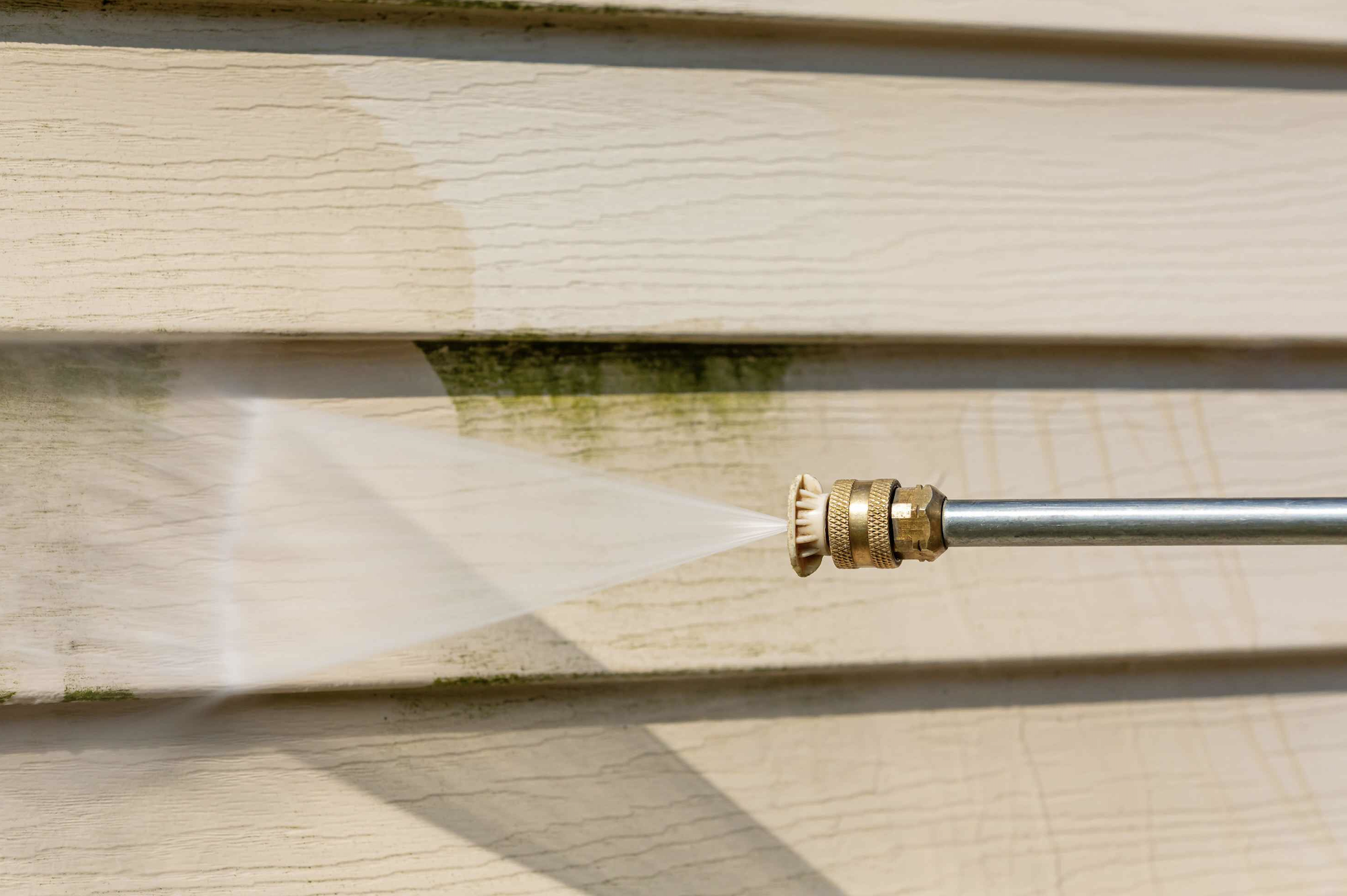
Rust-colored streaks or green patches on vinyl siding can be alarming, especially if they make it look like the siding itself is deteriorating. But in most cases, the problem isn’t the vinyl itself.
Vinyl siding is made from polyvinyl chloride, or PVC, a synthetic material that won’t rust like metal or rot like wood.
What homeowners may interpret as rust, mold, or deterioration is often surface-level staining or organic buildup caused by moisture, dirt, pollen, algae, mildew, or runoff from another part of the home.
Understanding where the discoloration is coming from can help homeowners determine whether the siding simply needs cleaning or whether there’s a larger maintenance issue to address.
Can vinyl siding rust?
Vinyl siding itself cannot rust because it doesn’t contain the metal needed for oxidation to occur. Instead, rust-colored streaks on vinyl siding typically originate from a metal component somewhere else on the home. When that metal is repeatedly exposed to air and moisture, it can begin to oxidize. Rainwater can then carry that rust-colored residue down the exterior, leaving stains on the siding below.
Possible sources can include:
- Steel fasteners or nails that aren’t designed for exterior use
- Metal components around windows
- Improperly capped or flashed windows
- Fascia and other exterior trim
- Gutters or nearby metal building components
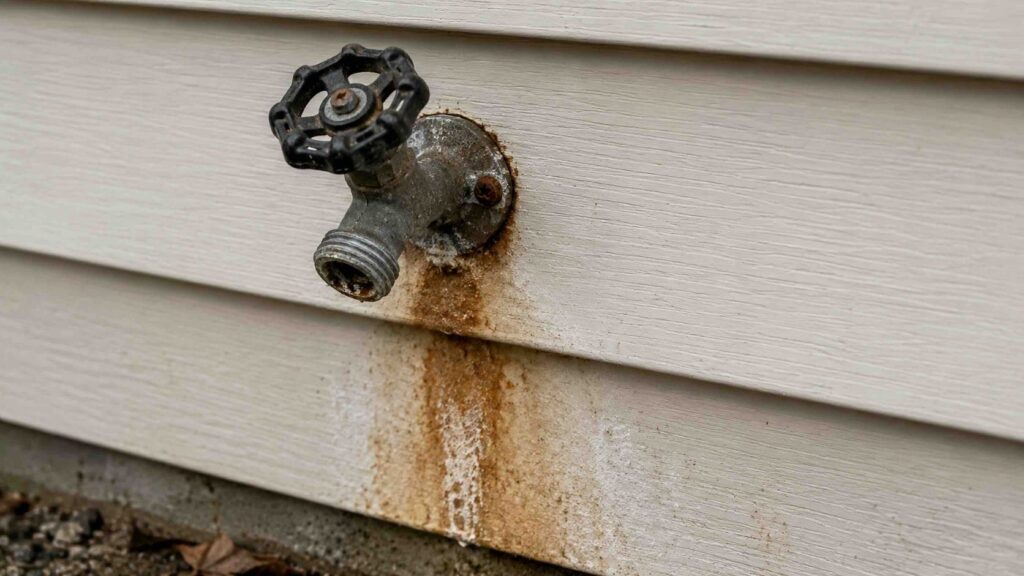
In other words, the siding may be stained by rust, but the vinyl itself isn’t rusting.
Recurring staining can be particularly important to investigate because it may signal that water isn’t draining away from the home as intended.
Can mold grow on vinyl siding?
Vinyl is an inorganic material, so it doesn’t provide the organic food source mold, mildew, or algae need to grow. However, dirt, pollen, plant debris, and other organic material can accumulate on the surface.
Add moisture and shade, and that buildup can create an environment where mildew or algae can develop.
That’s why green or dark discoloration may be more noticeable on:
- North-facing sides of the home that receive less direct sunlight
- Areas shaded by trees or neighboring structures
- Siding near shrubs, garden beds, or heavy vegetation
- Sections of the exterior that remain damp for longer periods
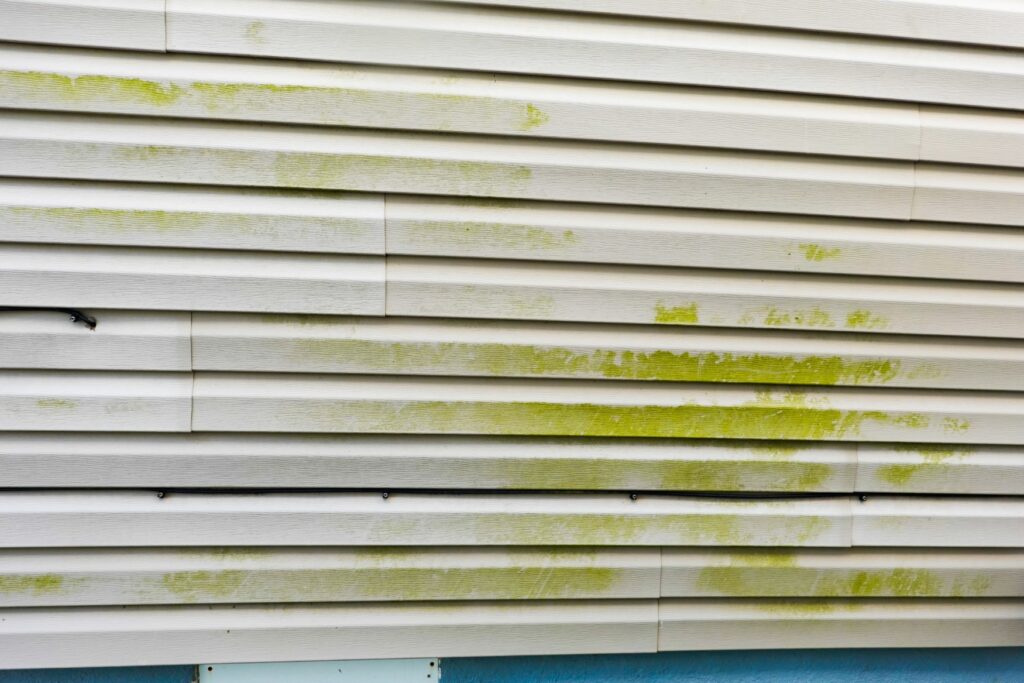
The growth is generally attached to the organic material sitting on the siding rather than feeding on the vinyl itself.
Can stains or growth on vinyl siding damage your home?
Surface-level staining or buildup generally isn’t harmful to the home’s structure. The bigger concern is determining why excessive moisture may be present in the first place.
Vinyl siding is only one component of an exterior wall system. Behind it should be properly installed sheathing and a water-resistant or vapor barrier designed to help manage moisture.
If siding, windows, flashing, or other exterior components are improperly installed, water may reach areas where it shouldn’t. Moisture trapped behind the siding can affect the wood sheathing underneath and potentially contribute to mold, rot, or other moisture-related damage.
That’s why recurring staining shouldn’t always be treated as purely cosmetic. Sometimes the discoloration is a clue that another component of the exterior needs attention.
How do you clean stains, mildew, or algae from vinyl siding?
For typical surface buildup, homeowners generally don’t need aggressive chemical cleaners. Water mixed with a mild dish soap is often enough to clean dirt, pollen, and organic buildup from vinyl siding. Homeowners should follow their siding manufacturer’s cleaning recommendations and avoid harsh or acid-based cleaners that could damage or discolor the material.
Routine cleaning can help keep siding looking its best, but maintenance shouldn’t stop at the siding itself.
Keeping gutters clear is particularly important. Gutters are designed to collect rainwater from the roof and direct it safely away from the home. When leaves and debris clog that drainage system, water can overflow and run across other building materials before traveling down the siding—bringing dirt, sediment, and rust-colored residue with it.
Homeowners should also keep an eye on:
- Window flashing, capping, and seals
- Gutters and downspouts
- Fascia and soffits
- Dryer and other exterior vents
- Areas where water repeatedly drains or collects
If a stain disappears after cleaning but continually returns, identifying and correcting its source will be more effective than repeatedly washing the siding.
How can homeowners prevent discoloration?
Vinyl siding is relatively low maintenance, but no exterior building material is entirely maintenance-free.
Periodically cleaning the siding, clearing gutters, maintaining exterior vents, and inspecting windows and other exterior components can all help prevent moisture and debris from accumulating where they shouldn’t.
Homeowners should also pay attention to vegetation growing close to the house. Trees and shrubs can increase shade, trap humidity, and deposit pollen or other organic material against the siding.
Most importantly, proper installation matters. Even high-quality siding can’t perform as intended if the wall system beneath it isn’t properly protected from moisture.
So if you notice rust-colored streaks, green buildup, or other discoloration on vinyl siding, don’t assume the vinyl is failing. Clean the affected area, then look a little higher—or a little deeper—to determine where the staining or moisture is actually coming from.
If your siding is showing signs of staining, buildup, or wear, it may be time to take a closer look at your home’s exterior. Learn more about POWER’s siding solutions and how the right materials and installation can help protect your home for years to come.
Back to News