Feb 6, 2026
Do Solar Panels Work in the Winter? Myths vs. Facts
As homeowners look for ways to lower energy costs and reduce their environmental footprint, we present solar panels as a smart, popular solution. Yet, one of the most common questions we hear is whether solar panels actually work during the winter months. Make no mistake, solar panels produce significantly more energy in the summer months when there’s exponentially more sunlight to shine on them. However, we’re going to lay out the case that investing in solar is good year round.
Let’s separate fact from fiction and explore how solar panels perform in winter, why they remain an energy-efficient solution year-round, and what homeowners should really expect. Before we get into the myths, we’ll define what solar is, how it works, and why homeowners go solar.
What is Solar Power?
Solar power is energy generated from sunlight and converted into electricity using solar panels, also known as photovoltaic (PV) modules. These panels are made up of individual solar cells, typically composed of silicon, that transform sunlight into usable energy.
Here’s how the process works:
- Sunlight hits the solar panels.
Solar cells absorb sunlight in the form of particles called photons. - Electrons begin moving.
The energy from sunlight activates electrons inside the solar cells, creating an electric current. - Electricity is converted for home use.
Solar panels generate direct current (DC) electricity. An inverter converts this into alternating current (AC) electricity, which powers homes and appliances. - Energy is used, stored, or sent to the grid.
Homeowners can use solar energy immediately, store excess power in batteries, or send it back to the grid through net metering. In some cases, solar systems produce more energy than a home uses, causing the electric meter to run backward.
Placement and Position of Solar Panels
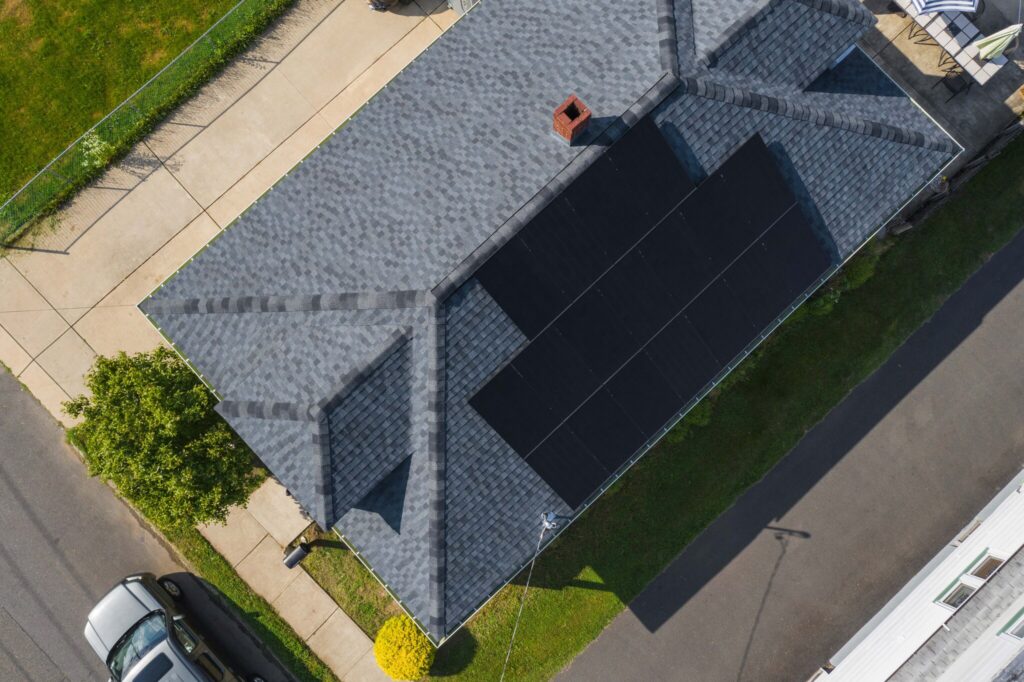
In the United States and Northern Hemisphere, solar panels produce the most energy when installed on south-facing roof planes. Because of the Earth’s tilt, the sun travels across the southern sky, giving these roof surfaces the most consistent sunlight. Installers also consider shading, roof angle, and available space to maximize production.
Why Solar Makes Sense
Traditional electricity travels from power plants to substations and through power lines before reaching homes, losing energy along the way. Solar panels generate electricity directly at your home, making energy production more efficient and reducing reliance on the grid.
Why Homeowners Go Solar
Solar incentives vary by state and utility, however, these are widely popular programs across the U.S. If you’re considering solar, start by checking if your state offers these incentives:
- Lower Utility Bills – Producing your own electricity reduces how much power you need to purchase from your utility company.
- Net Energy Metering (NEM) – Allows homeowners to receive credits for excess electricity their solar system sends back to the grid. These credits can help offset future electricity use.
- Solar Renewable Energy Certificates (SRECs) – SRECs allow homeowners to earn certificates for the solar energy their system produces. These certificates can be sold for additional income, with availability and value varying by state and market conditions.
- 25-Year Equipment Warranties – Most solar panels are designed and guaranteed to perform reliably for decades, offering long-term energy savings and system protection.
- Full Net Metering – Full Net Metering is a policy that allows solar homeowners to receive full retail credit for the excess electricity their system sends back to the grid. These credits can be used to offset electricity pulled from the grid at times when the solar system is not producing enough energy, such as at night or during cloudy weather. Availability and program details vary by state, utility, and local regulations.
How Solar Panels Work, Even in Winter
Solar panels generate electricity by converting sunlight–not heat–into usable energy. This distinction is important to know because many people commonly associate solar power with warm, sunny summer days. In reality, solar technology is designed to capture light, not temperature. Which there is more of in the summer.
Modern solar systems are built to perform in a wide range of climates and weather conditions. While winter weather can impact daily energy output, it does not stop solar panels from producing power altogether.
Myth #1: Solar panels don’t work in winter, snow, or rain
Truth: Solar panels work in almost all weather conditions
Clouds, snow, rain, and overcast skies reduce the amountof sunlight, but they don’t eliminate it. Even on cloudy days, sunlight still reaches the earth’s surface, allowing solar panels to generate electricity, just at a reduced capacity.
Many homeowners are surprised to learn that solar panels can perform more efficiently in colder temperatures. Solar panels get hot in the summer. If there’s a lot more heat on roof it is less efficient than if you get sunlight on a colder day. Heat affects the energy output and solar panel efficiency, and excessive heat can interfere with the electrical conversion process, meaning cooler weather can actually improve efficiency when sunlight is available.
Efficiency measures how well a solar panel converts sunlight into electricity, while energy production refers to the total amount of electricity the panel generates over a given period of time.
Modern solar panels are also designed to withstand harsh conditions, including snow accumulation, freezing temperatures, and winter storms.
Myth #2: Solar panels are less effective because winter days are shorter
Truth: Shorter days do reduce total energy production, but solar panels still generate electricity whenever sunlight is present
It’s true that winter days are shorter, which reduce the number of sunlight hours available for energy generation. However, solar panels are designed to maximize energy capture during daylight hours regardless of season.
Many solar systems are sized to account for seasonal changes, producing surplus energy during longer summer days that can offset reduced winter output.
Homeowners can either store unused solar energy with a battery system or use Net Energy Metering (NEM) to receive credits by sending excess energy back to the grid.
Myth #3: Snow is the worst thing for solar panels
Truth: Hail typically poses a greater risk to solar panels than snow
While snow may temporarily cover solar panels, it usually doesn’t stay long enough to cause damage or long-term performance issues. Because solar panels are installed at an angle, snow often slides off naturally. The dark, glass surface of solar panels also absorbs sunlight and heat, helping snow melt faster than it would on a traditional roof. In cases of heavy accumulation, homeowners may need to safely clear excess snow to restore full production.
Solar panels are designed and tested to withstand harsh weather conditions, including heavy snow loads, ice, and freezing temperatures. Most systems are built with durable, tempered glass and are engineered to remain reliable and productive even in winter climates.
Myth #4: Solar isn’t worth the investment in colder climates
Truth: Some very successful solar markets experience cold winters.
Regions with cold, sunny winters often see productive solar performance. Countries and states with long winters continue to adopt solar energy because it remains one of the most energy efficient ways to generate power over time.
Why Solar Panels Are a Smart, Energy-Efficient Investment
Beyond performance, solar panels offer long-term financial and environmental benefits. Homeowners can take advantage of financial incentives, including a reduced utility bill, many jurisdictions offer net metering options, and some states still offer solar renewable energy credits.
By producing clean, renewable energy, solar panels reduce reliance on traditional power sources and help stabilize energy costs, especially during periods of high demand in winter months.
Solar with POWER HRG
The best time to invest in solar projects is during the winter. Contracting a solar project in the winter months means you will be ready up for those high-production months in the spring and summer.
Available in select territories, POWER’s solar solutions help homeowners take control of their energy use through clean, renewable power. Each system is custom-designed to fit your roof, installed by trained professionals, and backed by a lifetime labor warranty.
Speaking with a knowledgeable representative can help you understand your solar options and determine whether solar panels are the right energy-efficient solution for your home.
Learn more about our solar services, see where solar is available, or request a free estimate.
Back to News